
The administration has proposed changes to the foreign direct investment (FDI) policy in the space sector in an effort to draw in foreign firms for the production of launch vehicles and satellites. The modifications, which were announced in a gazette notice on April 16, 2024, provide clarity on foreign direct investment (FDI) in satellites, launch vehicles, related systems or subsystems, and spaceport development. They also specify a more liberalized entry route.
With the title “Foreign Exchange Management (Non-debt Instruments) (Third Amendment) Rules, 2024,” the gazette notice seeks to make it easier for prospective investors to support Indian space enterprises. These revisions were previously approved by the Union Cabinet.
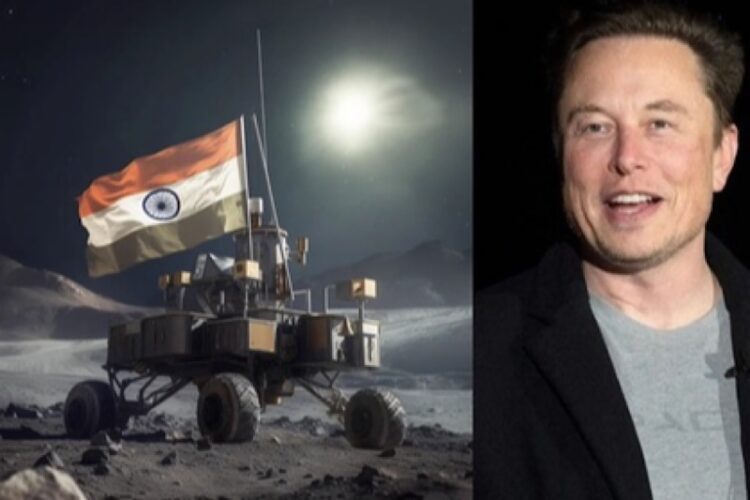
The statement was made shortly before Elon Musk, the CEO of Tesla, is slated to visit India on April 21 and 22, during which he is likely to meet with a number of Indian space companies. Furthermore, Starlink, Musk’s satellite internet project, is almost finalized for approval.
In accordance with the modified policy, activities related to the ground segment and user segment, satellite data products, and satellite production and operation are eligible for up to 74% FDI under the automatic route. If it exceeds 74%, authorization from the government is needed.
The automated method allows up to 49% of FDI for spaceport construction, launch vehicles, and related systems or subsystems. But above 49%, the government’s consent is required.
Moreover, without official authorization, 100 percent FDI may be used to manufacture parts and systems/sub-systems for user segments, ground segments, and satellites.
Previously, only with government approval could foreign direct investment (FDI) be allowed for the construction and operation of satellites.
By introducing relaxed standards for various sub-sectors and activities, the Union Cabinet has relaxed the FDI policy in the space sector, in keeping with the vision and strategy outlined in the Indian Space Policy 2023.
The Department of Space engaged with multiple industrial and internal stakeholders, including IN-SPACe, ISRO, and NSIL. Through the action, domestic organizations will be able to compete on a worldwide scale and increase their share of the global space economy by improving their capabilities and knowledge in satellite and launch vehicle technologies.

- A new version of the Maruti Ignis Radiance Edition has been unveiled at a price of Rs 5.49 lakh - July 26, 2024
- A new set of features has been launched in Google Maps in India, as well as reports about Android Auto incidents - July 26, 2024
- Sanya Malhotra appointed as Brand Ambassador for HMD India - July 24, 2024